After eight
Camera
This short extract has a lot of different camera works. for example, the start of the film is a medium shot, this is of a boy carrying the bag, the next shot after that is a close up shot, Following the close up shot is an extreme close up shot, this makes the film look very mysterious. The next few shots are the same, there all close ups and extreme close ups of the people. After the extreme close up of the girl washing the dishes its a medium shot of the boy who looks like he is closing/locking the door. The next few shots are medium shots and close up shots. The film ends with an extreme close up of the blooded knife/axe.
Editing
Throughout this film there is a very slow pace, The duration between the different cuts are quite long compared to other thrillers. The long duration of the cuts causes more tension in the film.
Mise en scene
The film is set in a house, and a back garden, The boy in the film is dressed smart, like he has come home from work, and the girl is dressed like a normal housewife. The man is outside in the shed, and the girl is in the kitchen wiping the dishes and making food. The house seems like it is a family house.
Sound
Throughout this film there is a background sound that plays throughout the extract, this is a spooky sound keeps the audience scared. When the boy goes inside the house you only hear him talking. That's the only dialog in the film, apart from that you hear sounds of the girl chopping something up in the kitchen.
Showing posts with label Research. Show all posts
Showing posts with label Research. Show all posts
Thursday, 26 March 2015

Wednesday, 25 March 2015
cinematography
This video shows the shots that were used when filming.
the shots in this short extract are, long shot, medium shot, close up, extreme close up,point of view, over the shoulder shot, low angle shot, high angle shot, crane shot, rolling shot, pan shot, tracking shot, and the tilt shot. This video clip shows that i understand the camera techniques
Long shot; is to show the audience the whole shot.
Medium shot; is used throughout filming to show the audience a normal shot.
close up; used to focus on someone or an object.
Extreme close up; very similar to close up but more in detail.
point of view; is used to show the audience what actor see's.
over the shoulder; to show conservation between two actors.
low angle; to show someone is powerful.
high angle; to show someone is weak.
Tuesday, 24 March 2015
idents
Production companies:
US:
-Dreamworks
-Paramount
-Lionsgate
-MGM
-Warner Bros


UK:
-British film commission
-Uk film council
-Island pictures
-Clerkenwell films
After the IDENT use a FADE IN. The titles should then be in
the following order:
(1) 'Your
Production Company' Presents
(3)
Starring or With
(4) Male
star
(5)
Female star or other way round
(6) Title
of film - or could be at the end
(7) Also
starring - 2/3/names - each on seperate title
(8) Then
3/4/5 of the following - you choose - each on seperate title
Editing
Music
Cinematography
or Director of Photography
Casting
Set
Designer
Costume
Designer
Script
(9) Then
Producer(s) - can be more than one
(10)
Always finish with Director - one name, usually the same as A Film By ...
(11)
Could put title here
Remember
to use LiveType and try to make titles interesting. They can be either over
black or superimposed over your film. Space them out over the two minutes of
the film.Give the audience plenty of time to read the titles.
(12)
Finish with a fade out & fade music out
SE7EN:
Your able to see a series of breakaways to
able to present each of the title sequence of which the occurrence within the
background is obliged to the basis of the film therefore it relates not just
something random happening. But the font which is used is small & a italic
font, also it appears showing all the elements of the title sequence varying
all over the screen. the style to which it's presented flickers which suggests
a state of uncertainty which is developed within the film. The colour is in white
as the background is in black therefore it's corresponding with the setting.
Panic Room:
You see the location and outset to which
the film is based which is within a city with loads of tall buildings etc. The
font of the writing is Bold and big to let it stand out amongst the
surroundings of the massive buildings. Even more so the style of writing sticks
out to present that the writing is apart of the buildings etc this adds an
effect to show that everything is apart of the surroundings such as actors, music
etc. The colour is white therefore showing against the dark background as the
buildings block out the sun therefore sense of darkness.
North by Northwest:
its set within a green background with
lines which is a graphic match as it links the lines are represented to then
show they are windows of a big building which is then a comparison shown of a
reflection of the streets. the writing is presented in a joint way they come
from opposite directions the writing is in white which is shown a bold layout
Tuesday, 10 March 2015
Analysis of past thrillers
The catalyst
Camera
The short film starts off with a medium shot of a person opening a door, the shot then goes into a point of view shot of him putting a knife in a door. As the door opens you see a high angle shot of he person coming into the house. Then when he's up the stairs you see a medium shot of the the person going into the door. From then the camera is in a medium shot till he puts the bag onto the bed. As he gets onto the bed and looks into the gun aim and the shot is an extreme close up. Then it goes back to a medium shot of the boy running away. When the person gets into the car there's another medium shot of him getting strangled.
Editing
The scene starts off with a slow pace, and gradually builds up, this causes the tension of the audience. The catalyst has a lot of long shots, and the duration of the shots are more longer then other past thrillers.
Mise en scene
This scene is set in a deserted piece of land, full of grass, tress and nature. At the start, a character is dressed in a suit and uses a knife to pick the lock on a door to break in. At this point he goes into a room and removes a gun rifle from a bag. He then aims out the window using the scope and shoots. A man then gets shot and another runs away. The camera the follows the man who is running. The man then wears casual clothing and a flat hat. The man then gets in the car and notice the driver is dead. A man in the back seat then chokes the man and kills him. After he gets out the car he walks and it ends.
Sound
The sound in the background of this film is very quiet, nearly all the sound in this thriller extract is diegetic. There is a very quite non diegetic soundtrack playing in the background of the extract.
There are sounds of breathing, and when the person is being chased you can hear him heavily breathing. Furthermore near the end you can hear the sound of the person being suffocated.
Monday, 2 March 2015
How to film a thriller
A thriller has a variety of different conventions used to make it look like a thriller.
For example, a tracking shot, this gives the viewers the illusion of the person being followed, it creates tension in the viewers minds.
Furthermore, a lot of high angles shots are also used in thrillers this shows the characters venerability also a high angle works against the low angle shot which makes the character look superior.
in addition, thrillers usually use cross dissolve shots, this makes the illusion of the person in the film walking for a long while, basically it shows the passing of time. The shot reverse shot is also common in thrillers, this could be used with the point of view shot, if a person is walking a shot reverse shot would show his facial expression while it shows him walking.
Another convention is the sinister music, this is a non diegetic, it creates fear in the viewers eyes, furthermore its only heard by the viewers its not heard by the characters in the film world sinister music shows sense of fear in the viewers mind, it makes it seem as if danger is occurring.
To follow this, there is also diegetic sound in thrillers, for example this could be the sound of breathing, diegetic sound could be anything thats heard by the people in the world of the film.
Furthermore, sound effects in a thriller create impact, they can create more fear in the viewers mind, furthermore sound effects can cause tension.
In thrillers, to create tension and fear there are hidden watchers, this is framed through a window on opening, its effective because it frames the person the camera is being looked at. Another convention that creates tension is extreme close up, for example this could be of an eye opening, it makes it seem as if the person in the film is being watched. lastly.
An effective which is really useful in thriller films is the speed of editing, for example things could start of really slow, then gradually when the sinister music comes on the speed of editing would get faster. The final convention that is effective in a thriller film is slow motion shot, this is used when the character in the film is chasing after something and he realises that nothing is actually there.
Tuesday, 27 January 2015
Analysis of past student thrillers
Hunter
Camera
The short film starts off with a medium shot of the detective walking into the school office the first scene also contains a tracking shot following the detective around the school. Then the shot changes to a medium shot of the detective talking to the lady at the reception. Then when the detective sits down interviewing the teacher, the shot goes into an over the shoulder shot and a reverse shot of the teacher getting interviewed. From that the scene goes into a straight cut when the detective gets hit around the head with a baseball bat. From there, there's a tracking shot of the body getting dragged into a room. Then the last shot is a dissolve shot and then the scene cuts.
Editing
The scene starts of with a slow pace, that gradually gets faster. Furthermore in this short there are alot of jump cuts throughout this short film. There is also a galaxy production introduction, this makes it clear to who they are. The best editing in this short film was the bat scene, this is because it looked really realistic, it really got the viewers shook.
Sound
There isn't any dialog in this short film, however the short film does contain a lot of non diegetic sound, this sound is the sound track played throughout the film, it doesn't get heard by the people in the film. This soundtrack makes every thing in the film more intense. The main sound heard in this film is the sound of the baseball hitting the floor, followed by the sound of the body being dragged into the room.
Mise en Scene
The film is set in a school office that is where it starts, that is followed by the interview in the classroom. The dress code in this film is pretty simple, the detective is wearing a smart shirt, with black trousers followed by a smart coat. The killer being interviewed is wearing all black, with a beanie and gloves.
Monday, 19 January 2015
Transformers 4 Age of extinction
Transformers opening scene sound
 In the opening scene of brick, you don't really hear any on screen sound, all the sound in the opening scene is non-diegetic, The sound starts off really slow and towards the end it gets much faster. The only diegetic sound you hear from the opening is the sound of the water fall, and the sound of the dinosaurs fighting. Near the end of the opening you hear the sound of the dinosaurs getting killed and burnt.
Opening scene camera
For camera it looks like its used alot of wide shots, there is a few close up shots of the dinosaurs fighting. Then near the end there's a wide shot of the dinosaurs running away from the aliens.
Opening scene editing
The scene starts of really slowly and gradually speeds up, till the end where the things get more intense. The cuts in the film have a lot of duration between each cut, for example the first cut takes about 40-50 seconds before it cuts into the next cut. The next cut then has a duration of 20 seconds, These long cuts are only at the very start, when things begin to pace abit more the cuts get smaller and smaller, at the start I presume the cuts are that long because of the director wanting to show the whole scene. Throughout this whole opening scene there's about 7/8 cuts.
Mise en scene
From the scene you can see that the time it was recorded was the Mesozoic Era, in this era was when the dinosaurs were around. The background looks really nice and green, this means this means that there was no pollution in them times. The place looks like a mountain area, where there's a waterfall. Also, from the scene it looks like there is an alien invasion, that killed all the dinosaurs. Even though you cant see the aliens you can see their spaceships.
Friday, 16 January 2015
Zodiac
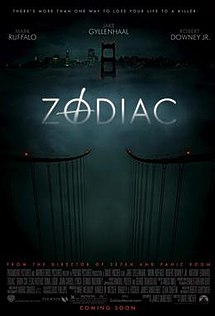 Zodiac Sound
The opening scene starts off with non diegetic sound of a soundtrack playing in the back, it is then followed up by a sound of a car pulling up towards a house, you can hear the sound of fireworks going off, this is diegetic sound because its happening in the world of the film. Then when the car stops you can hear the sound of the horn beeping and dialog between two characters. You can hear the sound of one of the characters playing with a lighter that is followed by the sound of the car door opening and the character sitting inside. Then you hear the sound of the car driving off. When the car stops you hear dialog and then the sound of another car pulling up next to the car. Then you hear the sound of fireworks being shot at the car and laughs, followed by the car that pulled up driving off. Then you hear the sound of another car pulling up and the sound of the car stopping then driving around. Then you hear the sound of the car coming back and stopping. You then hear the sound of the car door opening and the person walking unto the car, and then you hear dialog from the character followed by gun shots, in the back you hear the sound of a soundtrack being played that is non diegetic sound.
After the soundtrack ends you hear the sound of a police radio.
Zodiac Camera
For camera, the opening scene starts of with a wide shot of Los Angeles, Then you see a tracking shot of a car being driven into the drive in-front of someones house. Then you see a reverse shot followed by a medium angle shot. Then there's a mid shot of the two people in the car driving. Then there's a high angle shot of the car, followed by a mid shot and a reverse shot. Then there's a point of view shot of a car driving up-to the car with the people in it then driving off. After that its back to the reverse shot. Then there's a point of view shot of the car that drove off driving back to the car and a mid shot o the first car. Then a tracking shot of a person walking up to the car and a reverse shot of the gun shooting the people in the car.
Zodiac editing
The scene starts off really slow coming up to the scene of the killed shooting the two people where it gets alot faster. It's almost as if the tension is building up to that scene. All together in the scene their are about 40/45 cuts and the ones in the starting are the ones with the most duration.
Mise en scene
From the opening scene of Zodiac you can tell that the people were living in the 80s times, this is because of the way that they are dressed, specially the people who are the ages between 20-25 they have bright colours on. Also, the characters in the film have an old American accent they dont really sound like the Americans nowadays.
Colour/mise en scene
 Colour
The first use of colour was in films such as Voyage a Travers L'Impossible by the pioneer George Melies in 1904. Here the film was painted hand by hand.
 By 1933, we had the first full length colour film, this was the use of the two-strip technicolor using only red and green. The first full three strip Technicolor was Becky Sharp. From the 1930's to the 1940's black and white represented reality and colour represented fantasy and spectacle.
Denotation-The literal description of an idea, concept or object.
Connotation-When we associate with a particular idea, concept or object.
Colour works on the subconscious mind to create mood.
For example, when you see the colour red you think of things like anger, blood, violence, aggression but this all depends on which context you see the colour in, cos if red can also represent love, passion, valentines day, and romance. When driving you see the colour red for stop, and when its closer to december you see it as getting closer to christmas. Red can also be used to represent football teams, for example arsenal and man u.
When you see the colour blue, you think sad, emptiness and cold, this would be in a film context. Also, when you're using a tap you see blue as the cold water, this means colours are also used as signs. Furthermore people use blue to represent water and the sky, or sea.
Finally, when looking at the colour green, you think of sick, illness. in addition of the colour green, it can be used to represent plants and trees, or even vegetables, in conclusion, the colour green was used to represent a big beast called the hulk in marvel films.
Colours are used to represent a variety of different things from films, an example of this would be the opening scene from we need to talk about Kevin, in this film there is a lot of use of the colour red, this could only imply that something bad is going to happen, like its saying 'danger'
Tomatina 2010 Film "We Need To Talk About Kevin."
Mise en scene
Mise en scene is in the scene or frame, there are mainly 5 important,
1. settings and props.
2. costume, hair and make up.
3. facial expressions and body language.
4. lighting and colour.
5. positioning of characters and objects in the frame.
Setting is when a media text takes place props are the objects we see in the setting.
Costume hair &
Tuesday, 16 December 2014
Monday, 8 December 2014
no country for old men
No Country For old Men Sound
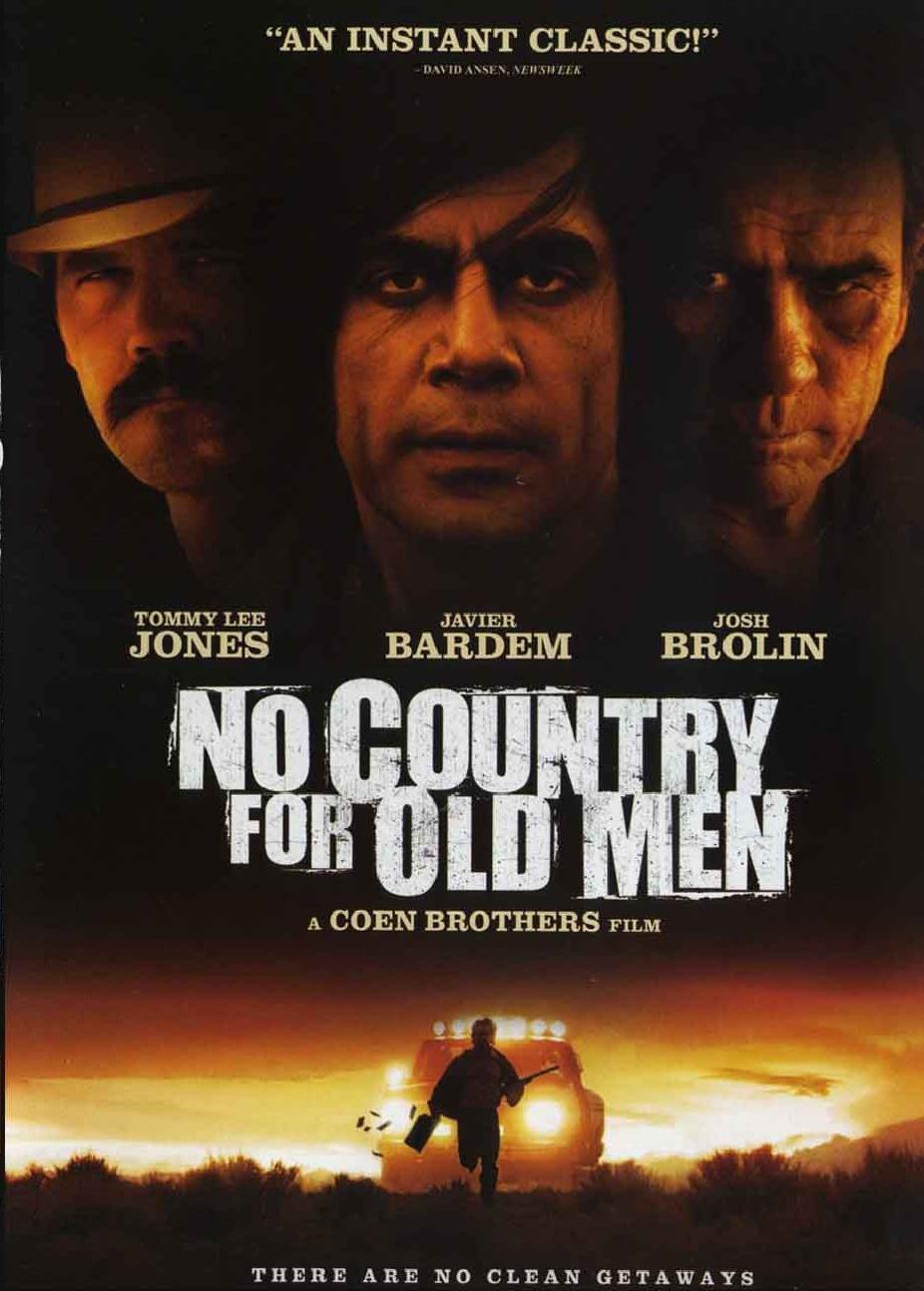 The start of the film starts of with non diegetic sound, its the sound of the narrator speaking and starting off the film by saying what happened. After you can hear the sound of the wind blowing barren wilder niff, it seems deserted, lonely and isolated. furthermore, you then hear the sound of footsteps that's diegetic sound because its happening in the world of the film. Next you can hear the sound of the police car door opening and the person getting inside. Gradually you hear the sound of the car driving off. In addition you then hear the police officer talking on the phone, this is dialog also diegetic sound. As the police officer puts the phone down you hear the sound of the person who got arrested getting up behind the officer and strangling him, you can hear the sound of the hand cuffs around his neck choking the officer also the sound of the officer screaming in pain. After the officer is dead you hear the sound of the killer washing his hands in the sink. the killer then walks out of the station and drives off. Finally the killer stops behind a random person driving his car, you hear dialog between the killer and the person and he puts the oxygen tank pipe to his forehead and he kills the person.
No Country For old Men Camera
The opening scene starts off with a medium angle shot which shows the office putting the person into the police car. The next shot after that is the high angle shot which shows the officer opening the door and sitting the person inside of the car. After its again back to the medium angle shot of the officer putting the oxygen tank into the car. After there's a point of view shot of the officer getting into the car. After that, there's a wide angle shot of the car driving off to the police station. In the police station there's a medium shot followed by the close up shots. After there's a high angle shot of the killer washing the blood off his hands. When the killer is leaving you can see a tracking shot of his footsteps leaving the building and following the car.
No Country For Old Men Editing
The opening scene starts off really slow, nothing really happens then when it gets to the police station things get much faster. throughout the opening scene there are 30/31 cuts.
Mise En Scene
From the opening scene you can tell that its a western setting, the place seems really quiet. It's not really a socializing place, the roads seem empty. The police station seems really empty as-well, only one cop looking after the place.
The start of the film starts of with non diegetic sound, its the sound of the narrator speaking and starting off the film by saying what happened. After you can hear the sound of the wind blowing barren wilder niff, it seems deserted, lonely and isolated. furthermore, you then hear the sound of footsteps that's diegetic sound because its happening in the world of the film. Next you can hear the sound of the police car door opening and the person getting inside. Gradually you hear the sound of the car driving off. In addition you then hear the police officer talking on the phone, this is dialog also diegetic sound. As the police officer puts the phone down you hear the sound of the person who got arrested getting up behind the officer and strangling him, you can hear the sound of the hand cuffs around his neck choking the officer also the sound of the officer screaming in pain. After the officer is dead you hear the sound of the killer washing his hands in the sink. the killer then walks out of the station and drives off. Finally the killer stops behind a random person driving his car, you hear dialog between the killer and the person and he puts the oxygen tank pipe to his forehead and he kills the person.No Country For old Men Camera
The opening scene starts off with a medium angle shot which shows the office putting the person into the police car. The next shot after that is the high angle shot which shows the officer opening the door and sitting the person inside of the car. After its again back to the medium angle shot of the officer putting the oxygen tank into the car. After there's a point of view shot of the officer getting into the car. After that, there's a wide angle shot of the car driving off to the police station. In the police station there's a medium shot followed by the close up shots. After there's a high angle shot of the killer washing the blood off his hands. When the killer is leaving you can see a tracking shot of his footsteps leaving the building and following the car.
No Country For Old Men Editing
The opening scene starts off really slow, nothing really happens then when it gets to the police station things get much faster. throughout the opening scene there are 30/31 cuts.
Mise En Scene
From the opening scene you can tell that its a western setting, the place seems really quiet. It's not really a socializing place, the roads seem empty. The police station seems really empty as-well, only one cop looking after the place.
Friday, 5 December 2014
continuity editing
Continuity editing
Continuity editing is the predominant technique of film editing/video editing. The main purpose for this is to smooth over the inherent discontinuity of the editing process. Furthermore continuity editing requires the director to make the film as much like the audience's reality as possible. For example this would mean the film is trying to recreate what the world around us is trying to make easier on the audience to comprehend and understand the actions happening on screen.
Eyeline match
The eyeline match is when we see a character looking at something off screen and then we cut to a shot of and then we cut to a shot of what they are looking at. The eyeline match is a film editing technique associated with the continuity editing system. Alfred Hitchcock used a lot of eyeline match in his film rear window.
Rear Window Eyeline Match from D.E. Williams on Vimeo.
Match-on-action
The match-on-action is when we see a character start an action in one shot and then we see them continue it in the next. Although the two shots may have actually been shot hours apart from each other, cutting on action gives the impression of continuous time when watching the edited film.
By having a subject begin with an action in one shot and carry it through to completion in the next year, the editor creates a visual bridge which distracts the viewer from noticing the cut or any slight continuity error between the shots.
Graphic match
When two shots are linked with a similar shape or composition of an image. A graphic match often helps establish a strong continuity of action and linking the two shots metaphorically.
180 degree rule
The 180-degree rule is a basic guideline that states that two characters or other elements in the same scene should always have the same left/right hand relationship to each other.An imaginary line called the axis connects the characters and by keeping the camera on one side of this axis for every shot in the scene.

Shot/reverse shot
This is used to show a conversation/argument. This is when one character is shown looking at another character, and then the other character is shown looking back at the first character.
Continuity editing is the predominant technique of film editing/video editing. The main purpose for this is to smooth over the inherent discontinuity of the editing process. Furthermore continuity editing requires the director to make the film as much like the audience's reality as possible. For example this would mean the film is trying to recreate what the world around us is trying to make easier on the audience to comprehend and understand the actions happening on screen.
Eyeline match
The eyeline match is when we see a character looking at something off screen and then we cut to a shot of and then we cut to a shot of what they are looking at. The eyeline match is a film editing technique associated with the continuity editing system. Alfred Hitchcock used a lot of eyeline match in his film rear window.
Rear Window Eyeline Match from D.E. Williams on Vimeo.
Match-on-action
The match-on-action is when we see a character start an action in one shot and then we see them continue it in the next. Although the two shots may have actually been shot hours apart from each other, cutting on action gives the impression of continuous time when watching the edited film.
By having a subject begin with an action in one shot and carry it through to completion in the next year, the editor creates a visual bridge which distracts the viewer from noticing the cut or any slight continuity error between the shots.
Graphic match
When two shots are linked with a similar shape or composition of an image. A graphic match often helps establish a strong continuity of action and linking the two shots metaphorically.
180 degree rule
The 180-degree rule is a basic guideline that states that two characters or other elements in the same scene should always have the same left/right hand relationship to each other.An imaginary line called the axis connects the characters and by keeping the camera on one side of this axis for every shot in the scene.
Shot/reverse shot
This is used to show a conversation/argument. This is when one character is shown looking at another character, and then the other character is shown looking back at the first character.
Monday, 24 November 2014
Media Theory
 Roland Barthes
 was a French literacy theorist, philosopher, linguist, critic and semiotician. He was born on the 12th of November and died on the 26th of March 1980. He was born in a small town called cherbourg in Normandy.
Roland Barthes discovered the 'enigma codes' that apply to all thrillers.
The enigma code is the mystery in the film, its in every thriller.
Roland Barthes also said that all texts are a 'complex' bundle of meaning.
There are also 'open' endings where at the end of the film the story isn't resolved.
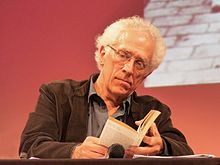 Tzvetan Odorov
 is a Franco-Bulgarian historian, philosopher, literacy critic, sociologist and an essayist. He was born on the 1st of March 1939. He was born in Sofia Bulgaria.
Tzvetan Odorov discovered the 5 stages, which all films follow, its a narrative pattern through various stages.
1. Equilibrium, at the start of a story, where everything should be as it should, normal.
2. A disruption of that order by an event
3. A recognition of that order by an event
4. An attempt to repair the damage of the disruption
5. A return or restoration of a new equilibrium
Roland Barthes: all texts are 'complex' bundles of meaning.
Enigma codes (problems introduced) usually in 'disruption' stage.
open-not resolved at the end.
polysemic texts-lots of different meanings.
Levi- Traditional Holly wood narrative structure
Vladimir propp
Vladimir Propp - character types - analysed traditional folk stories.
hero/villain/helper/Donor(provider)/farther/dispatcher/princess/false hero - N.B one character can perform more than one role.
Laura Mulvey
 Laura Mulvey is a British feminist film theorist, she was born on the 15th of august 1941. She made a theory called the 'male gaze theory.' This theory suggests that the male gaze denies women human identity, relegating hem to the status of objects to be admired for physical appearance.
The theory suggests women can more often than not only watch a film from a secondary perspective and only view themselves from a mans perspective. However the presence of a women is mainstream film texts is something that is vital. Often a female character has no real importance herself, it is how she makes the male feel or act that is the importance. Mulvey states that the role o a female character in a narrative has two functions.
1. As an erotic object for the characters within the narrative view.
2. As an erotic object for the spectators within the cinema to view.
Laura Mulvey also discussed the term 'scopophilia' which means 'love of watching'
Laura Mulvey's theory relates to classical Hollywood cinema.
The opening scene of a history of violence
 A History Of Violence
Opening Scene Sound
The opening scene starts with diegetic sound of drilling in the back ground that leads up to the sound of the car door opening and the person getting in also as the person get in you can hear dialog from both the characters. After that the sound that you hear the sound of the radio station that is diegetic. While the person drives the car you can hear other cars in the background. When the car stops in-front of the door and the other character gets in you can hear the sound of the car door as he enters the car again after that you can hear dialog. When character gets out the car and walks into the house you can hear the sound of tension build up this is non diegetic sound because only the audience watching the film can hear it, the characters in the film cant. When the persons looking around the house you can hear the sound of the bell and the sound of the tap water pouring into the bottle. As the water is being poured into the bottle a little girl comes near to the man and you can hear more dialog, next the sound of gun shot and the girl's scream is both diegetic.
Opening Scene Camera
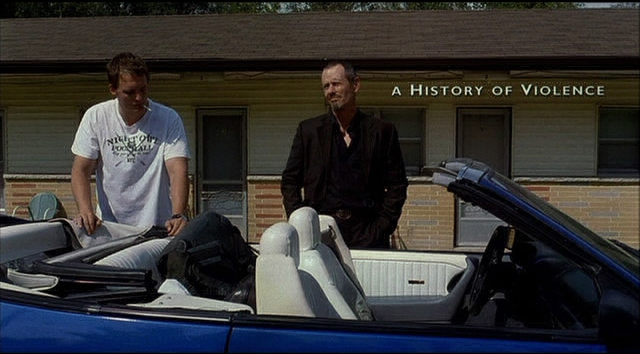 In the opening scene of the film it starts off with two shots, the tracking shot followed by the medium angle shot that shows the two characters. From watching the film you can see that it was filmed by a steady cam. When the cars moving the camera has a tracking shot to follow the car that's followed by the point of view shot. When the person enters the house again the camera has a steady tracking shot, it follows him around the shot. When the girl comes there's a close shot of the gun behind his back. finally the last shot is a low angle shot of the girl screaming.
Opening Scene Mise En Scene
From the opening scene you can see that the the films filmed in a western setting. You can see that the place is a family sort of motel there's garden chairs. The car seems pretty old and the people are dressed pretty casual, casual smart clothes. The motel looks really deserted it seems mysterious like something is about to happen. When the person goes into the house there are two dead bodies on the floor. Followed by the gun that shows danger.
Editing
The opening scene doesn't really contain alot of edits, all together in the opening scene there are about 11/12 cuts most of the cuts happen during dramatic moments. the edits are really slow and that makes the film even more mysterious.
Friday, 21 November 2014
Styles of editing

Transition - how the shots are joined together.
Straight cut
A straight cut shot is when one shot moves instantaneously to the next shot without grasping too much of the audiences attention. Most films nowadays have a straight cut shot, its really common.
The straight cut shot helps retain reality. The positive thing about a straight cut shot is that it doesn't break the viewers suspension of disbelief.
Dissolve

If the film maker wants to show a connection between two characters, places or objects he would use a dissolve shot and blend it all in.
Fades
A fade shot is a gradual darkening or lightening of an image until it becomes black or white. One shot will fade only a black or white screen can be seen.
Also, a fade shot indicates the end of a particular section of time within the narrative. Finally, it can also show the passing of time.
Wipes

A film that uses a lot of wipes is a film called star wars.
Jump cut
A jump cut is where the audiences attention is brought into focus on something very suddenly. It is mainly in which two sequential shots of the same subjects are taken from the same camera position but it varies only slightly. This type of edit gives the effect of jumping forward in time.


Birds

The Birds
The birds is a 1963 horror/thriller film directed by Alfred Hitchcock. the writers of the film were Daphne Du Maurier who wrote the story and Evan Hunter who wrote the screen play. The stars of the film were Rob Taylor, Tippi Hendren and Suzanne Plushette. The film is 119 minutes long.
Thriller Conventions
The external threat in the film is from nature, 'The Birds'. Usually in Hitchcock films there's 'nowhere to hide' for example in birds they were in

Furthermore, there's a lot of suspense used in the film, for example when Melanie is going into the school she notices all the birds outside and she goes
into the school and tells everyone to run out.
In addition, dramatic irony is also used in the film, for example in the school yard scene Tippi Hendren does not know the birds have been gathering but the audience does, the audience has knowledge denied to the character. Hitchcock Technique (sound) in the schoolyard scene the underlying score of the innocent child's song is in contrast to the evil in the nature. Tippi Henderson's character is only guilty of taking nature for granted. In the birds the MacGuffin is the 'love birds' because because of the birds the story kept going, the audience don't really care about the birds they want to see the actor and actress get together.
Did you know?
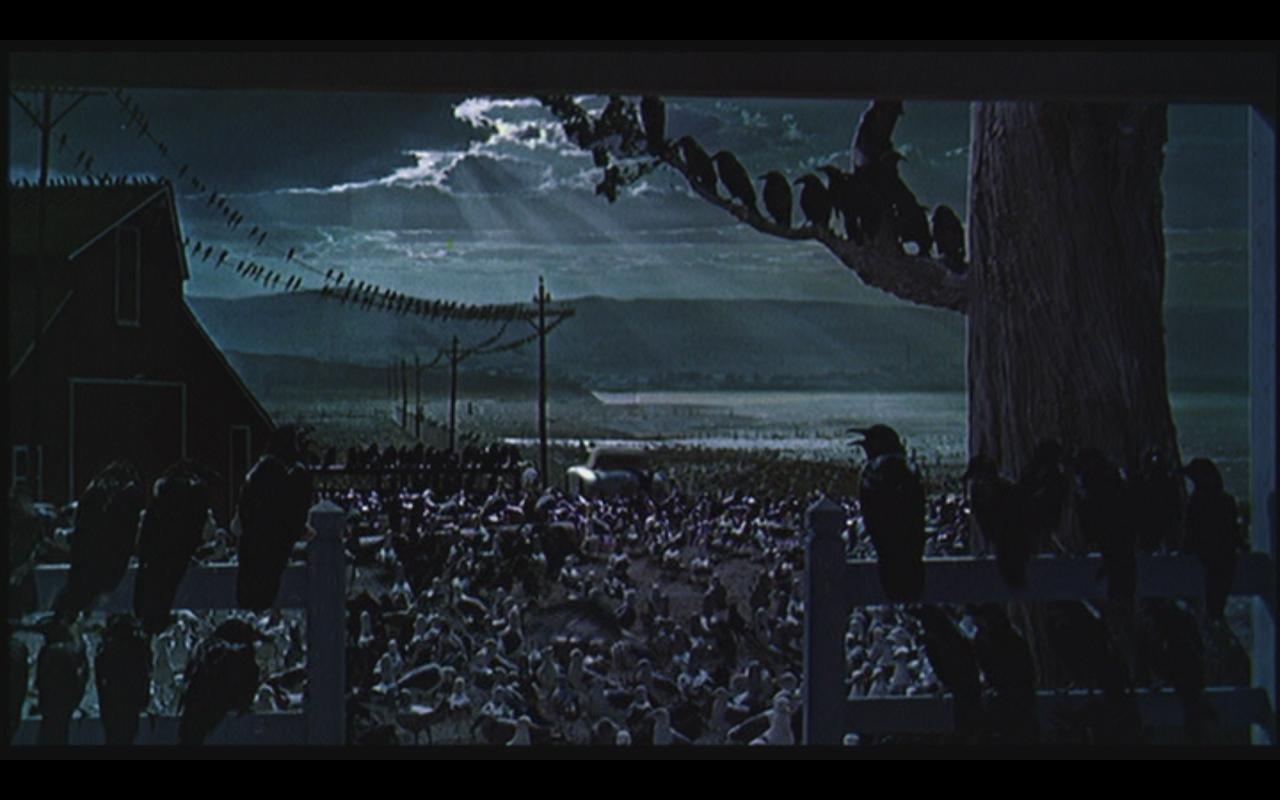 The scene where Tippi Hendren is ravaged by birds near the end of the movie took a week to film, the birds were attached to her clothes by long nylon threads so they could not get away. It is believed that Hitchcock had a crush on Tippi and she rejected him so he just told her to go upstairs and open the door, she didn't know that she was going to be ambushed by the birds. it is said to believe that Tippi suffered a lot from that, she was in therapy for years. Also, the film features 370 effects shots. The final shot is composite of 32 separately filmed elements. In conclusion, a number of endings were being
considered for this film. One that was considered
would have showed the Golden Gate Bridge
completely covered by birds.
However the film didn't finish with the usual 'THE END'
title because Hitchcock wanted to give the impression of
unending terror.
When audience left the film's UK premier at the Odeon, Leicester Square, London, they were greeted by the sound of screeching and flapping birds by loudspeakers hidden in the trees to scare them further.
unknown
 Unknown (2011)
Unknown is a 2011 thriller, it was directed by Jaume Collet-Serra and the writers of the film were Oliver Butcher who wrote the screenplay and Stephen Cornwell who also wrote the screenplay.
The stars of the film are Liam Neeson, Diane Kruger and January Jones.
The budget of the film was $30,000,000 (estimated). In the opening weekend the film made $21,856,389. Gradually by when the film had gone worldwide it made $130,786,397.
Key Scenes of tension
The film has a lot of essential characteristic of a good thriller, in the film there are alot of moments of high tension. For example the hospital scene where Liam Neeson is reaching for scissors leading to murder. The scene has effective sound that, disorienting sounds. The shot most used in the hospital scene is the close up, this was used efficiently. lastly, in the scene there was fast editing that lead to the escape.
Another scene that was efficient was the club scene, this scene was
good because it had loud booming soundtrack that was disorientating and
threatening. Also the dark screen, you could only see shadows, it looked indistinct
it would make the viewer share the main character's confusion.
Featurette behind the scenes
From the featurette behind the scenes all the stars call the film a psychological thriller, its nail baiting it makes you wonder what is happening. The stars also say the amnesia and the identity cris is the villain in the film.
The MacGuffin
The MacGuffin in this film is Prince Shalla world food, because of this the basics of the story is provided but really and truly the viewer is only interested in Liam Neeson's character.
 The Car Chase
This scene has a lot of shots used to film it, for example, the close up shot is used regularly when Liam Neeson is in the car. Furthermore, another shot that is used is the tracking shot, it follows the car while being chased. It is effective because it is fast facing it makes the viewer really want to know what happens. The lighting in the scene is dark, its filmed at night.
rope
Rope
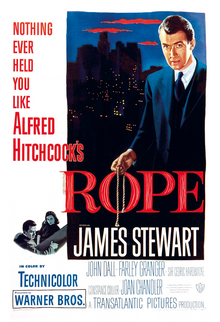
The Trailer
The trailer is really effective because it grabs the viewers attention, the music causes a lot of suspense, it makes the viewers actually want to watch the film.Even though the trailer ruins the best bits of the film, it shows who killed him, it ruins the whole film.
The opening scene
The opening scene is one of the most best scenes of the film, this is because the opening scene has the most suspense, it makes the audience wonder why the two men have killed the person, what will happen next, if they'd ever get caught. The scene starts off by grabbing the readers attention already from the start.
Background context
Rope is adapted from patrick hamilton's 1929 play which itself was said to be based on the grisly Leopold and Loeb case of 1924. Nathan Leopold and Richard Leob upper-class chicago law students who murdered a teenage boy.
Suspense
Devices such as suspense, red herrings and cliffhangers are used extensively, for an example ascene where suspense is used is the casket, when Rupert is going to open the casket to see whether the dead body is in there or not.
10 minute exract
When Alfred Hitchcock was filming this film he wanted to film it like it was a play, therefore he had to film very quickly, and if he wanted to change the reel he would have to focus the camera on one thing and do it quickly. This wasn't really good because everything was cramped in it didn't really look that good. The whole play was shot in continuous, unedited 10-minute takes.
North By North West A Perfect Thriller
North by North by West is an an American spy thriller film made in 1959. It was filmed in the Unites States and directed by Alfred Hitchcock. The main actor of the film is Cary Grand and the actress is Eva Marie Saint. The role of the villain was played by James Mason. The screen play was written by Ernest Lehman who wanted to write 'the Hitchcock picture to end all the Hitchcock pictures'.
Plot
North by North West is about a story of how a person called Roger O. Thornhill is mistaken for 'George Kaplan' and is kidnapped by Valerian and Licht two hit men who work for Vandamm, the villain of the movie. The two hit men take Thornhill to a long island estate of Lester Townsend. When he arrives Vandamm interrogates Thornhill. Leonard then intends to get rid of Thornhill by forcing him to drink bourbon. However because Thornhill is a resource and smart hero, he manages to escape the staged driving. Throughout the film Roger tries to escape the villains.

North by North West follows Todorov's narrative theory, it contains five stages,
1. Equilibrium, where everything is as it should be.
2. A disruption of that order by an event.
3. A recognition that disorder by an event.
4.An attempt to repair the damage of the disrupt.
5.A return or restoration of a new equilibrium.
itchcock
 In all of Hitchcock's films, Hitchcock planned every scene visually in advance, when directing Hitchcock never looked at the camera, he imagined himself looking at a cinema screen. He's films contain alot of fast pacing and frequent action, In North by North West Hitchcock make the actor of the film a resourceful hero, for example the scene where he's in the exhibition and the villains try to kill him, he gets away. Hitchcock believes that the stress on the visuals makes cinema accessible in different languages. Hitchcock also said he wants to transfer the menace that appears on screen into the mind of the audience.
The most greatest scene from North by North West
In this scene Roger O. Thornhill who is getting mistaken for George Kaplan finally comes to meet George Kaplan, and is nearly killed by a crop duster. As you can see the crop duster is chasing Roger, the suspence in this scene was overwhelming
Representation of women in 'North by Northwest'
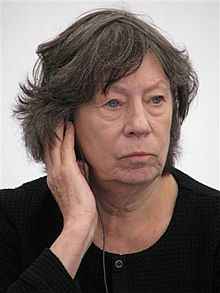
Laura Mulvey came up with 'visual pleasure and cinema' she said that men are active and women are passive. Women do not have agency, they don'd move the plot forward.The camera is male, the audience is forced to identify with male gaze. The cinema reflects patriarchal society. Patriarchy & phallocentrism linked - phallus (penis) a symbol of power - e.g. in cinema guns =phallus=power.
Patriarchal society= Men dictate the rules.
Mulvey argues we live in a patriarchal society in which men set the majority of the rules and construct and represent the ideal visions, roles and male dominance over women.
The worry is a passive audience will be influenced by this representation of reality and copy it and it will actually become reality.
She believed in the 'male gaze' which was women were viewed as objects of male erotic desire in film and audience.
That men were active and women were passive.
The women in north by north west is scene as an object for sexual pleasure.
Subscribe to:
Posts (Atom)