Roland Barthes
 Roland Barthes was a French literacy theorist, philosopher, linguist, critic and semiotician. He was born on the 12th of November and died on the 26th of March 1980. He was born in a small town called cherbourg in Normandy.
Roland Barthes discovered the 'enigma codes' that apply to all thrillers.
The enigma code is the mystery in the film, its in every thriller.
Roland Barthes also said that all texts are a 'complex' bundle of meaning.
There are also 'open' endings where at the end of the film the story isn't resolved.
 Tzvetan Odorov
 Tzvetan Odorov is a Franco-Bulgarian historian, philosopher, literacy critic, sociologist and an essayist. He was born on the 1st of March 1939. He was born in Sofia Bulgaria.
Tzvetan Odorov discovered the 5 stages, which all films follow, its a narrative pattern through various stages.
1. Equilibrium, at the start of a story, where everything should be as it should, normal.
2. A disruption of that order by an event
3. A recognition of that order by an event
4. An attempt to repair the damage of the disruption
5. A return or restoration of a new equilibrium
Roland Barthes: all texts are 'complex' bundles of meaning.
Enigma codes (problems introduced) usually in 'disruption' stage.
open-not resolved at the end.
polysemic texts-lots of different meanings.
Levi- Traditional Holly wood narrative structure
Vladimir propp
Vladimir Propp - character types - analysed traditional folk stories.
hero/villain/helper/Donor(provider)/farther/dispatcher/princess/false hero - N.B one character can perform more than one role.
Laura Mulvey
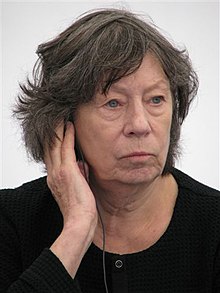
 Laura Mulvey is a British feminist film theorist, she was born on the 15th of august 1941. She made a theory called the 'male gaze theory.' This theory suggests that the male gaze denies women human identity, relegating hem to the status of objects to be admired for physical appearance.
The theory suggests women can more often than not only watch a film from a secondary perspective and only view themselves from a mans perspective. However the presence of a women is mainstream film texts is something that is vital. Often a female character has no real importance herself, it is how she makes the male feel or act that is the importance. Mulvey states that the role o a female character in a narrative has two functions.
1. As an erotic object for the characters within the narrative view.
2. As an erotic object for the spectators within the cinema to view.
Laura Mulvey also discussed the term 'scopophilia' which means 'love of watching'
Laura Mulvey's theory relates to classical Hollywood cinema.