Psycho 1960 from ayyyyyyyyyyy1
Tuesday, 16 December 2014

Friday, 12 December 2014
Preliminary Task
Preliminary Task
This preliminary task is a demonstration of continuity editing, it shoes that i can use: Match on action, shot/reverse shot, 180 degree rule, eye-line match.
In the film Jack Fraser was playing a police officer who is interrogating a murderer Daniel L Bridge.
Danny Canary is the murderer, in the play his name is Daniel L Bridge.
James Casal was the camera guy recording the whole action,
and I was the sound guy, making sure the sound is clear, making sure the mic isn't coming in the picture.
While recording our eye line match match was Daniel L Bridge looking at the clock, this was basically a shot of Daniel's eyes then taking a shot of the clock on the wall.
Also, we did the shot reverse, this was when the officer and Daniel were talking to each other.
The next shot we had in our video was the match on action, this was when James took a shot of the officer walking in the corridor, then a shot of him from inside the room walking through the door.
Evaluation
When doing my filming for my preliminary task, we did use each technique accurately. Also, while filming we didn't make any mistakes, the only thing we need to improve on is how fast we work, we should of finished the filming in one day. The most positive element we have done in this film is the match on action shot when jack is walking through the door, i think it was recorded well. The only improvements we need are just to work quicker and much more faster. The best shot we have had while filming the preliminary task was the match on action, we think this was the best because the shot was very accurate and precise. The shot we need to work on is the reverse shot, when Jack and Danny were talking to each other, this is because they kept laughing and we had to keep filming the shot over and over again.
Monday, 8 December 2014
no country for old men
No Country For old Men Sound
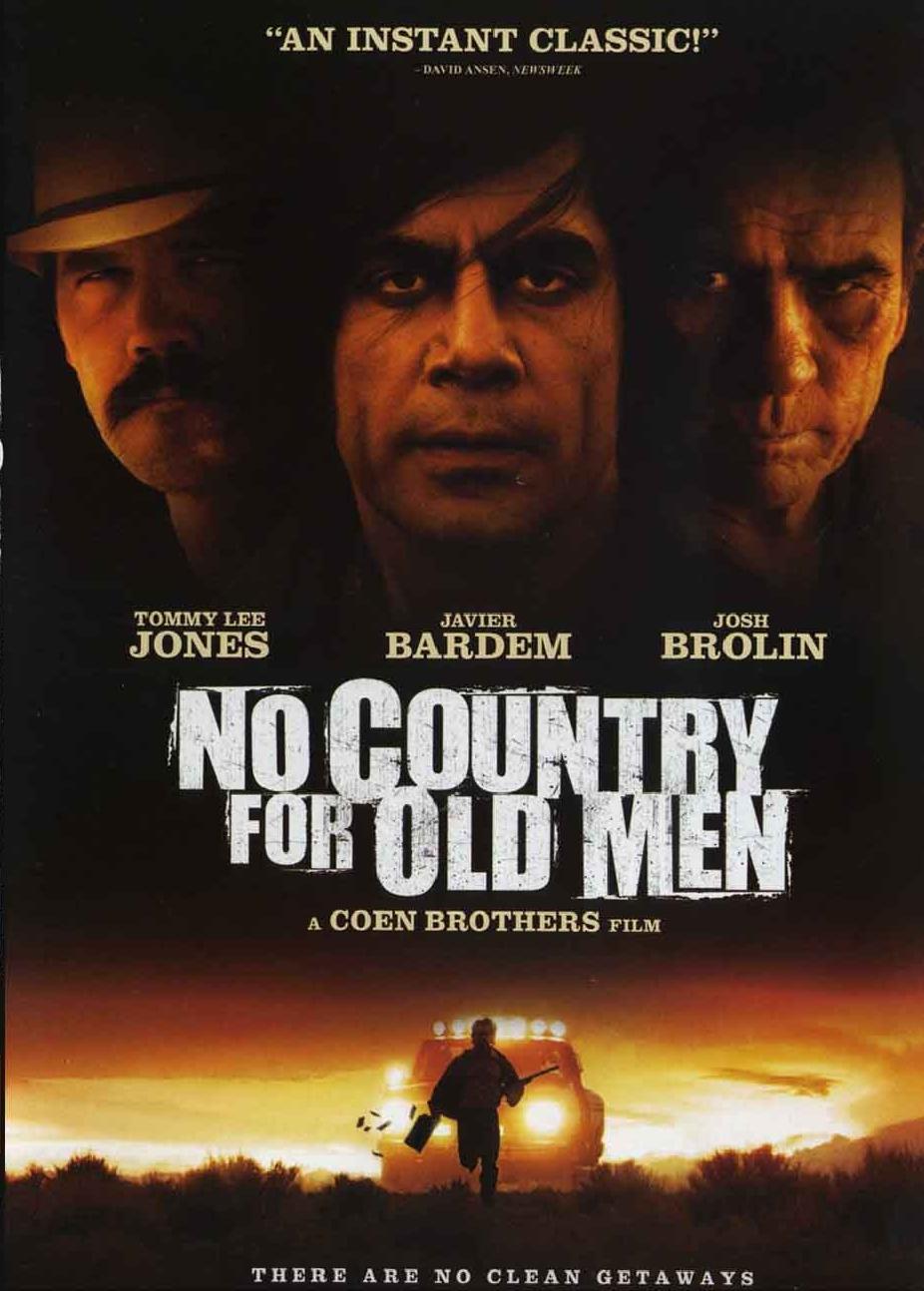 The start of the film starts of with non diegetic sound, its the sound of the narrator speaking and starting off the film by saying what happened. After you can hear the sound of the wind blowing barren wilder niff, it seems deserted, lonely and isolated. furthermore, you then hear the sound of footsteps that's diegetic sound because its happening in the world of the film. Next you can hear the sound of the police car door opening and the person getting inside. Gradually you hear the sound of the car driving off. In addition you then hear the police officer talking on the phone, this is dialog also diegetic sound. As the police officer puts the phone down you hear the sound of the person who got arrested getting up behind the officer and strangling him, you can hear the sound of the hand cuffs around his neck choking the officer also the sound of the officer screaming in pain. After the officer is dead you hear the sound of the killer washing his hands in the sink. the killer then walks out of the station and drives off. Finally the killer stops behind a random person driving his car, you hear dialog between the killer and the person and he puts the oxygen tank pipe to his forehead and he kills the person.
No Country For old Men Camera
The opening scene starts off with a medium angle shot which shows the office putting the person into the police car. The next shot after that is the high angle shot which shows the officer opening the door and sitting the person inside of the car. After its again back to the medium angle shot of the officer putting the oxygen tank into the car. After there's a point of view shot of the officer getting into the car. After that, there's a wide angle shot of the car driving off to the police station. In the police station there's a medium shot followed by the close up shots. After there's a high angle shot of the killer washing the blood off his hands. When the killer is leaving you can see a tracking shot of his footsteps leaving the building and following the car.
No Country For Old Men Editing
The opening scene starts off really slow, nothing really happens then when it gets to the police station things get much faster. throughout the opening scene there are 30/31 cuts.
Mise En Scene
From the opening scene you can tell that its a western setting, the place seems really quiet. It's not really a socializing place, the roads seem empty. The police station seems really empty as-well, only one cop looking after the place.
The start of the film starts of with non diegetic sound, its the sound of the narrator speaking and starting off the film by saying what happened. After you can hear the sound of the wind blowing barren wilder niff, it seems deserted, lonely and isolated. furthermore, you then hear the sound of footsteps that's diegetic sound because its happening in the world of the film. Next you can hear the sound of the police car door opening and the person getting inside. Gradually you hear the sound of the car driving off. In addition you then hear the police officer talking on the phone, this is dialog also diegetic sound. As the police officer puts the phone down you hear the sound of the person who got arrested getting up behind the officer and strangling him, you can hear the sound of the hand cuffs around his neck choking the officer also the sound of the officer screaming in pain. After the officer is dead you hear the sound of the killer washing his hands in the sink. the killer then walks out of the station and drives off. Finally the killer stops behind a random person driving his car, you hear dialog between the killer and the person and he puts the oxygen tank pipe to his forehead and he kills the person.No Country For old Men Camera
The opening scene starts off with a medium angle shot which shows the office putting the person into the police car. The next shot after that is the high angle shot which shows the officer opening the door and sitting the person inside of the car. After its again back to the medium angle shot of the officer putting the oxygen tank into the car. After there's a point of view shot of the officer getting into the car. After that, there's a wide angle shot of the car driving off to the police station. In the police station there's a medium shot followed by the close up shots. After there's a high angle shot of the killer washing the blood off his hands. When the killer is leaving you can see a tracking shot of his footsteps leaving the building and following the car.
No Country For Old Men Editing
The opening scene starts off really slow, nothing really happens then when it gets to the police station things get much faster. throughout the opening scene there are 30/31 cuts.
Mise En Scene
From the opening scene you can tell that its a western setting, the place seems really quiet. It's not really a socializing place, the roads seem empty. The police station seems really empty as-well, only one cop looking after the place.
Friday, 5 December 2014
continuity editing
Continuity editing
Continuity editing is the predominant technique of film editing/video editing. The main purpose for this is to smooth over the inherent discontinuity of the editing process. Furthermore continuity editing requires the director to make the film as much like the audience's reality as possible. For example this would mean the film is trying to recreate what the world around us is trying to make easier on the audience to comprehend and understand the actions happening on screen.
Eyeline match
The eyeline match is when we see a character looking at something off screen and then we cut to a shot of and then we cut to a shot of what they are looking at. The eyeline match is a film editing technique associated with the continuity editing system. Alfred Hitchcock used a lot of eyeline match in his film rear window.
Rear Window Eyeline Match from D.E. Williams on Vimeo.
Match-on-action
The match-on-action is when we see a character start an action in one shot and then we see them continue it in the next. Although the two shots may have actually been shot hours apart from each other, cutting on action gives the impression of continuous time when watching the edited film.
By having a subject begin with an action in one shot and carry it through to completion in the next year, the editor creates a visual bridge which distracts the viewer from noticing the cut or any slight continuity error between the shots.
Graphic match
When two shots are linked with a similar shape or composition of an image. A graphic match often helps establish a strong continuity of action and linking the two shots metaphorically.
180 degree rule
The 180-degree rule is a basic guideline that states that two characters or other elements in the same scene should always have the same left/right hand relationship to each other.An imaginary line called the axis connects the characters and by keeping the camera on one side of this axis for every shot in the scene.

Shot/reverse shot
This is used to show a conversation/argument. This is when one character is shown looking at another character, and then the other character is shown looking back at the first character.
Continuity editing is the predominant technique of film editing/video editing. The main purpose for this is to smooth over the inherent discontinuity of the editing process. Furthermore continuity editing requires the director to make the film as much like the audience's reality as possible. For example this would mean the film is trying to recreate what the world around us is trying to make easier on the audience to comprehend and understand the actions happening on screen.
Eyeline match
The eyeline match is when we see a character looking at something off screen and then we cut to a shot of and then we cut to a shot of what they are looking at. The eyeline match is a film editing technique associated with the continuity editing system. Alfred Hitchcock used a lot of eyeline match in his film rear window.
Rear Window Eyeline Match from D.E. Williams on Vimeo.
Match-on-action
The match-on-action is when we see a character start an action in one shot and then we see them continue it in the next. Although the two shots may have actually been shot hours apart from each other, cutting on action gives the impression of continuous time when watching the edited film.
By having a subject begin with an action in one shot and carry it through to completion in the next year, the editor creates a visual bridge which distracts the viewer from noticing the cut or any slight continuity error between the shots.
Graphic match
When two shots are linked with a similar shape or composition of an image. A graphic match often helps establish a strong continuity of action and linking the two shots metaphorically.
180 degree rule
The 180-degree rule is a basic guideline that states that two characters or other elements in the same scene should always have the same left/right hand relationship to each other.An imaginary line called the axis connects the characters and by keeping the camera on one side of this axis for every shot in the scene.
Shot/reverse shot
This is used to show a conversation/argument. This is when one character is shown looking at another character, and then the other character is shown looking back at the first character.
Subscribe to:
Posts (Atom)